I'm too angry to blog thoughtfully about what's going on in Wisconsin.
My parents were schoolteachers under a string of Republican governors, and I remember seeing a photo in the newspaper of my dad and his fellow workers protesting at some school board meeting, singing union songs. When I became a graduate student, I joined unions and participated in picket lines, so I'm definitely feeling some solidarity with the people of Wisconsin.
Many times over the past few days, I've seen folks reference Martin Luther King Junior's reminder that "the arc of the moral universe is long but it bends toward justice." That sentence has become a sort of mantra for me over the past few days.
As many people have pointed out, the end of collective bargaining disproportionately affects women employees--as do various other actions being taken this legislative season in state legislatures across the nation.
I feel moved, then, to share one of my favorite songs. Here's Utah Phillips and Ani DiFranco performing their version of "Bread and Roses" (scroll to 1:18, where the song begins):
Lyrics (slightly different from the original lyrics):
As we come marching, marching, in the beauty of the day,
A million darkened kitchens, a thousand mill-lofts gray
Are brightened by the beauty a sudden sun discloses,
And the people hear us singing, “Bread and Roses, Bread and Roses.”
As we come marching, marching, we battle, too, for men –
For they are in this struggle and together we can win.
Our lives shall not be sweated from birth until life closes –
Hearts can starve as well as bodies; give us Bread, but give us Roses.
As we come marching, marching, a hundred million dead
Go crying through our singing their ancient cry for Bread;
Small art and love and beauty their drudging spirits knew –
Yes, it is bread we fight for — but we fight for Roses, too.
As we come marching, marching, we're standing proud and tall –
The rising of our women is the rising of us all –
No more the drudge and idler — ten that toil where one reposes –
But a sharing of life’s glories: Bread and Roses, Bread and Roses.
Showing posts with label In touch with my inner hippie. Show all posts
Showing posts with label In touch with my inner hippie. Show all posts
Thursday, March 10, 2011


Wednesday, January 19, 2011
Liking Ike
I can't believe I missed this anniversary, but one of my favorite American speeches turned 50 a couple days ago. It was overshadowed by the mainstream media's hoopla of the 50th anniversary of Kennedy's inauguration, so I'm dragging it into the light here.
Read Eisenhower's farewell address.
Read Eisenhower's farewell address.
Friday, January 14, 2011
Playgrounds
What I'm about to describe is going to sound a little kooky to many of you, but I feel moved to share it.
I spent most of the last week in Portland, Oregon at a little place called the Playground. Founded last year by Havi Brooks, the Playground is home to several different interesting events, all led by Havi. I attended a Rally specifically for folks who have been members for at least a year of a group run by her.
We began each day with some really, really difficult Shiva Nata. (Disclosure: For me, all levels of Shiva Nata are difficult; there's a reason, after all, its practitioners frequently refer to it simply as "the flailing.") At one point Havi had us do some level 7, which is unbelievably brain-scrambling and resulted, for me at least, in a day-long series of epiphanies in a week already packed with them. Shiva Nata was followed by savasana, and then by some reflective journaling and setting of intentions for the work we'd like to accomplish that day.
There were ten of us on the retreat, all of us working on separate projects and giving one another mutual support when we became stuck on a particular part of our projects or when we felt stymied in a more general way. My fellow Rallions were all bright, creative women who were so delightful to finally meet in person after a year of communicating online. I suppose the best way to describe Rally is as a silent retreat punctuated by whimsy and play (and profoundly fabulous pie from a nearby café.) I accomplished so much in three days—lots of writing and planning, but after doing the work I felt less intellectually exhausted (my usual state) than exhilarated.
I've been reflecting, then, on how I can bring the spirit—and some of the physical aspects, because they're also central to the experience—of Rally with me to my home and work.
Some ideas:
What about you? What are you trying out this semester or this year?
I spent most of the last week in Portland, Oregon at a little place called the Playground. Founded last year by Havi Brooks, the Playground is home to several different interesting events, all led by Havi. I attended a Rally specifically for folks who have been members for at least a year of a group run by her.
We began each day with some really, really difficult Shiva Nata. (Disclosure: For me, all levels of Shiva Nata are difficult; there's a reason, after all, its practitioners frequently refer to it simply as "the flailing.") At one point Havi had us do some level 7, which is unbelievably brain-scrambling and resulted, for me at least, in a day-long series of epiphanies in a week already packed with them. Shiva Nata was followed by savasana, and then by some reflective journaling and setting of intentions for the work we'd like to accomplish that day.
There were ten of us on the retreat, all of us working on separate projects and giving one another mutual support when we became stuck on a particular part of our projects or when we felt stymied in a more general way. My fellow Rallions were all bright, creative women who were so delightful to finally meet in person after a year of communicating online. I suppose the best way to describe Rally is as a silent retreat punctuated by whimsy and play (and profoundly fabulous pie from a nearby café.) I accomplished so much in three days—lots of writing and planning, but after doing the work I felt less intellectually exhausted (my usual state) than exhilarated.
I've been reflecting, then, on how I can bring the spirit—and some of the physical aspects, because they're also central to the experience—of Rally with me to my home and work.
Some ideas:
- There was one pattern-recognition exercise in particular—it involved various kinds of walking with intention—that I'll be trying out on my students when I'm teaching the capstone writing seminar this semester.
- I'm noting, now that I'm back home, a distinct lack of floor pillows in my house, and they're much needed, particularly when I play with Lucas on the floor of his room.
- Candles! Funky lamps! Plush monsters! A hammock (and we already have a hammock chair ready to mount on the back patio when it warms up).
- I'm going to recommit to practicing Shiva Nata. I was doing it every day for a while about a year ago, but then I stopped, and I'm not sure why. It provides some light, much-needed physical exercise, and I could benefit from the brain workout, too.
What about you? What are you trying out this semester or this year?
Monday, December 20, 2010
This Friend speaks my mind
Chuck Fager, director of Quaker House, on the repeal of Don't Ask Don't Tell:
This change has two important effects, I think:
First, it will enable thousands of present and future soldiers to pursue their careers on their merits, which is only as it should be.
Second, beyond these individual cases, repealing DADT strikes an important blow to the identification of war with masculinity, with heterosexuality, with America, and all three with God.
This identification is idolatry, pure and simple. But it is all too widespread in American Christianity, and it is way past time for it to be broken up.
Tuesday, November 23, 2010
On Faith
BrightStar blogged recently about wanting to re-embrace her faith. She wrote, "the very idea of trying and trying and not finding what I am seeking scares me."
Her short post resonated with me. I haven't written much here about faith because it's a hugely difficult thing for me to talk about. It's like several skeins of yarn all tangled together, each strand representing some years-long line of thought.
Among the strands:
- My early experiences with religion. When I was a small child, my parents attended with some regularity a Presbyterian church whose Sunday school teachings were largely inscrutable to me. When I was in the middle of elementary school, we began attending a local Congregational (later UCC) church. The Christian ed there made more sense to me, but the theology still didn't jibe with my understanding of the world. So in junior high I stopped attending church, and I considered myself an atheist. Maybe my conception of God was too narrow, but I just couldn't see the workings of a divine being in the world.
- Politics. The loudest Christian voices in this country are absolutely repellent to me. The homophobia in particular is unconscionable. (Note: I know there are plenty of queer Christians and queer allies among Christians. I'm talking here about the usual suspects we see in the mainstream media, OK?)
- My own long-term commitment to pacifism, plus a frustration with the American conflation of god with country and the resulting unthinking patriotism and jingoism.
And yet, despite my distaste for religion and my lack of belief in anything resembling the Christian god, I have retained some confidence in what might be called the soul--by which I mean not something that goes to heaven or hell once we shuffle off this mortal coil, but rather something profoundly human that at the same time transcends our everyday humanity--the essence that drives the best art, makes love possible, and allows us to empathize with people very unlike ourselves.
I am, it appears, an atheist with an abiding belief in the soul.
As you might imagine, there's not a lot of room for someone with my beliefs in the religious practices, and especially the Christian denominations, most common among Americans.
And yet I feel moved at this time to write something about my search for a welcoming spiritual practice.
In the fall of 2004, I was a graduate fellow at the Smithsonian Institution, and I found housing that was affordable, safe, and within walking distance of the National Mall in the form of the Young Women's Christian Home, a (theoretically) nonsectarian residence. I learned a lot about conservative American Christianity from my dorm mates during my three months there, and I had a lot of interesting conversations about faith and politics.
Sometimes "interesting" also meant troubling. At one new friend's invitation, I attended Baptist Bible study on Wednesday nights, an experience that underscored for me the delusions of fundamentalism based on "close readings" of the Bible. Let's just say that polysemy never occurred to these folks, and questions that suggested the possibility of multiple interpretations were not exactly welcome.
On Sunday mornings, the YWCH emptied as most of the women went to church, and frankly, after all of my nodding during dinner conversations with young conservatives and listening to one particular Baptist minister persuade his flock that the second coming of Christ will look like an atomic bomb blast and seeing the congregants imagine the schadenfreude the newly raptured would feel when that day finally arrived, I needed to cleanse.
My childhood best friend was Quaker, so when I was looking for someplace to be on Sunday morning, perhaps it's not surprising that I found myself walking from the Metro station in Dupont Circle, up Connecticut Avenue toward the neighborhood of ambassadorial residences that surrounded the Washington, D.C. Friends meetinghouse.
I had been reading a couple of books by Shelby Spong, who writes in Why Christianity Must Change or Die, "Institutional Christianity seems fearful of inquiry, fearful of freedom, fearful of knowledge--indeed, fearful of anything except its own repetitious propaganda, which has its origins in a world that none of us any longer inhabits." This really resonated with me, as did Spong's explanation in A New Christianity for a New World of his own beliefs. Spong is a former Episcopal bishop who, according to the first chapter of this book, is a Christian. Yet, as he writes,
One more bit from Spong:
I'm definitely a member of that audience. I'm open to Christian philosophies of empathy (walking a mile in another person's shoes), forgiveness and nonviolence (turn the other cheek), and deep caring for people who are unlike oneself. I don't see sufficient embrace or application of such philosophies in the many, many church services I have attended across the Christian spectrum.
So I wouldn't call myself a Christian. Maybe Christianish, though even that makes me uneasy because I find nauseating what passes for Christian discourse in the American political sphere.
Her short post resonated with me. I haven't written much here about faith because it's a hugely difficult thing for me to talk about. It's like several skeins of yarn all tangled together, each strand representing some years-long line of thought.
Among the strands:
- My early experiences with religion. When I was a small child, my parents attended with some regularity a Presbyterian church whose Sunday school teachings were largely inscrutable to me. When I was in the middle of elementary school, we began attending a local Congregational (later UCC) church. The Christian ed there made more sense to me, but the theology still didn't jibe with my understanding of the world. So in junior high I stopped attending church, and I considered myself an atheist. Maybe my conception of God was too narrow, but I just couldn't see the workings of a divine being in the world.
- Politics. The loudest Christian voices in this country are absolutely repellent to me. The homophobia in particular is unconscionable. (Note: I know there are plenty of queer Christians and queer allies among Christians. I'm talking here about the usual suspects we see in the mainstream media, OK?)
- My own long-term commitment to pacifism, plus a frustration with the American conflation of god with country and the resulting unthinking patriotism and jingoism.
And yet, despite my distaste for religion and my lack of belief in anything resembling the Christian god, I have retained some confidence in what might be called the soul--by which I mean not something that goes to heaven or hell once we shuffle off this mortal coil, but rather something profoundly human that at the same time transcends our everyday humanity--the essence that drives the best art, makes love possible, and allows us to empathize with people very unlike ourselves.
I am, it appears, an atheist with an abiding belief in the soul.
As you might imagine, there's not a lot of room for someone with my beliefs in the religious practices, and especially the Christian denominations, most common among Americans.
And yet I feel moved at this time to write something about my search for a welcoming spiritual practice.
* * *
In the fall of 2004, I was a graduate fellow at the Smithsonian Institution, and I found housing that was affordable, safe, and within walking distance of the National Mall in the form of the Young Women's Christian Home, a (theoretically) nonsectarian residence. I learned a lot about conservative American Christianity from my dorm mates during my three months there, and I had a lot of interesting conversations about faith and politics.
Sometimes "interesting" also meant troubling. At one new friend's invitation, I attended Baptist Bible study on Wednesday nights, an experience that underscored for me the delusions of fundamentalism based on "close readings" of the Bible. Let's just say that polysemy never occurred to these folks, and questions that suggested the possibility of multiple interpretations were not exactly welcome.
On Sunday mornings, the YWCH emptied as most of the women went to church, and frankly, after all of my nodding during dinner conversations with young conservatives and listening to one particular Baptist minister persuade his flock that the second coming of Christ will look like an atomic bomb blast and seeing the congregants imagine the schadenfreude the newly raptured would feel when that day finally arrived, I needed to cleanse.
My childhood best friend was Quaker, so when I was looking for someplace to be on Sunday morning, perhaps it's not surprising that I found myself walking from the Metro station in Dupont Circle, up Connecticut Avenue toward the neighborhood of ambassadorial residences that surrounded the Washington, D.C. Friends meetinghouse.
* * *
I had been reading a couple of books by Shelby Spong, who writes in Why Christianity Must Change or Die, "Institutional Christianity seems fearful of inquiry, fearful of freedom, fearful of knowledge--indeed, fearful of anything except its own repetitious propaganda, which has its origins in a world that none of us any longer inhabits." This really resonated with me, as did Spong's explanation in A New Christianity for a New World of his own beliefs. Spong is a former Episcopal bishop who, according to the first chapter of this book, is a Christian. Yet, as he writes,
I do not define God as a supernatural being. I do not believe in a deity who can help a nation win a war, intervene to cure a loved one's sickness, allow a particular athletic team to defeat its opponent, or affect the weather for anyone's benefit. I do not think it is appropriate for me to pretend that those things are possible when everything I know about the natural order of the world I inhabit proclaims they are not.Spong writes that because he does not see God as a supernatural being, he cannot claim the divinity of Jesus, nor his virgin birth, miracles, or resurrection. He continues,
I do not believe that this Jesus founded a church or that he established an ecclesiastical hierarchy beginning with the twelve apostles and enduring to this day. I do not believe that he created sacraments as a special means of grace or that these means of grace are, or can be, somehow controlled by the church, and thus are to be presided over only by the ordained. All of these things represent to me attempts on the part of human beings to accrue power for themselves and their particular religious institution.As I read on, and learned that Spong espouses feminist, antiracist, and queer-friendly stances on civil and human rights, I uttered an involuntary amen.
One more bit from Spong:
The primary question I seek to raise in this book is this: Can a person claim with integrity to be a Christian and at the same time dismiss, as I have done, so much of what has traditionally defined the content of the Christian faith? Would I be wiser and more honest if I were to do what so many others in my generation have done--namely , resign from my membership in this faith-system of my forebears? . . . . In the eyes of many, both in the Christian church and in the secular society, it would. . .have represented an act of integrity. It would not, however, have been honest, nor would it have been true to my deepest convictions. My problem has never been my faith. It has always been the literal way that human beings have chosen to articulate that faith.Dude was an Episcopal bishop. He knows whereof he speaks, and I suspect he knows to whom he speaks, that his audience is a very large one.
I'm definitely a member of that audience. I'm open to Christian philosophies of empathy (walking a mile in another person's shoes), forgiveness and nonviolence (turn the other cheek), and deep caring for people who are unlike oneself. I don't see sufficient embrace or application of such philosophies in the many, many church services I have attended across the Christian spectrum.
So I wouldn't call myself a Christian. Maybe Christianish, though even that makes me uneasy because I find nauseating what passes for Christian discourse in the American political sphere.
* * *
Back in the fall of 2004, I found myself spending increasing amounts of time on the Friends General Conference website. The overview I found there of Quaker belief was reassuring. I don't remember if the website had the same content then as it does now, but these questions in particular interested me:
At the moment, I have many things I'd just like to sit with in silence.
I'm still uneasy writing about faith in this space, because as I said, I'm an atheist, and I don't want to mislead anyone into thinking I'm opening my heart to their particular conception of Jesus, or that I'm open to proselytizing or evangelism. I wouldn't say I feel as if there's something missing in my life so much as I feel there's something there that I haven't adequately addressed.
What about you? What are the things you're uncomfortable writing about? And how did you find yourself where you are in your particular faith journey?
Back in the fall of 2004, I found myself spending increasing amounts of time on the Friends General Conference website. The overview I found there of Quaker belief was reassuring. I don't remember if the website had the same content then as it does now, but these questions in particular interested me:
- Are you seeking haven in a world which may not be in pace with your needs?
- Do you wish to join with us to help in finding ways to implement the historic peace testimony of Friends "to oppose all wars and preparation for wars? "
- Do you wish to discover how you, as an individual, can help to create a better world?
- Do you seek a religious home, without creeds or required statements of belief?
- Do you desire to wait upon God in an expectant silence without the presence of intermediaries?
- Are you looking for meaningful spiritual community?
* * *
At the moment, I have many things I'd just like to sit with in silence.
* * *
This past Sunday I attended the local unprogrammed Friends meeting. There were only nine of us in the room, which is a bit small for my taste, but we just about filled the room at the local literary center where the meeting gathers. The meeting last Sunday was a completely silent one, and afterward, instead of people shaking hands as I've seen elsewhere, we joined hands in a circle and shared our thoughts on the previous week.
I met some very interesting people, and I intend to go back, but since there weren't any other kids there, I'm not sure how I'll handle the Lucas situation. I do want to raise Lucas with Quaker values, and establish his dedication to the peace testimony--assuming he chooses to embrace it--so that if there's a time when he needs to be a conscientious objector, he'll have a long personal history to draw upon.
I haven't said anything here about Fang, but he's shown some interest in Quaker values, but I know that he and I don't always tune into the same faith wavelength, so we'll see if he joins me in my latest experimentation with faith.
I met some very interesting people, and I intend to go back, but since there weren't any other kids there, I'm not sure how I'll handle the Lucas situation. I do want to raise Lucas with Quaker values, and establish his dedication to the peace testimony--assuming he chooses to embrace it--so that if there's a time when he needs to be a conscientious objector, he'll have a long personal history to draw upon.
I haven't said anything here about Fang, but he's shown some interest in Quaker values, but I know that he and I don't always tune into the same faith wavelength, so we'll see if he joins me in my latest experimentation with faith.
I'm still uneasy writing about faith in this space, because as I said, I'm an atheist, and I don't want to mislead anyone into thinking I'm opening my heart to their particular conception of Jesus, or that I'm open to proselytizing or evangelism. I wouldn't say I feel as if there's something missing in my life so much as I feel there's something there that I haven't adequately addressed.
What about you? What are the things you're uncomfortable writing about? And how did you find yourself where you are in your particular faith journey?
Friday, July 09, 2010
Melancholy, and missing a friend
Fang has been feeling melancholy, and in my waning days in this charming college town, I can't help but join him in his nostalgia for a part of our life that has passed.
But as I set off on the next stage of my academic life, I find myself reflecting even further back, to college--the last place I was very sad to leave--and even to high school, to friends I haven't seen in a long time and to one in particular I will never see again.
I've been thinking about my friend killed seven weeks ago while bicycling. I hadn't seen Erik for many years, though I had been meaning to do so, since we ended up living a short stretch of freeway from one another. Erik and I ran in the same circles in high school--those awkwardly earnest folks, geeks, and nerds who constituted the gifted magnet at our high school.
We had many classes together--the most memorable being the tenth-grade P.E. class comprising those few of us who weren't on a sports team and who, thanks to the gifted program's odd block schedule, ended up taking P.E. only every other day. It resembled not so much a gifted P.E. class as an adaptive one, and to this day I have great sympathy for the soccer coach who tried to lead our class of intellectually curious, hormone-addled misfits through track, basketball, weight training, and especially swimming and badminton.
I remember a girl classmate and friend of ours, upon seeing the wild-haired, gangly, and Scots-Irish-pale Erik in gym shorts, asked him, "Do those legs go all the way up?" It wasn't meant as an insult--we had all experienced too many of those and we knew we looked dorky in our not-quite-regulation P.E. uniforms--and I still smile at the memory of Erik, with his big, bouncy, ground-covering gait, blinking through his round glasses in shock at someone commenting on a body that (again, like all of ours) was not usually an object of sexual attention.
Our last couple years of high school, we also often ate lunch together with the same circle of friends, on the lawn near the entrance to the band room--where we gravitated because so many of us spent a couple hours a day in symphonic winds, band, or orchestra. It was pretty obvious that Erik had a crush on me, but I wasn't ready--wouldn't be for years, really--for a boyfriend. Still, my feigned ignorance of Erik's interest never kept Erik from being ridiculously nice, and I regret that in my shyness around boys I never really let him into my life the way I might have.
On one of my birthdays--I can't remember if it was my fifteenth or sixteenth, but it was on a weekend afternoon--he looked up my home address and rode his bike quite a distance from his neighborhood to mine to deliver a birthday card. I was in a foul mood--in tears at the moment he showed up--and thanked him without letting him into the house, in part because of my mood but also because I was too embarrassed and confused about boys to let my parents know that I even talked to any. I've often regretted not letting Erik in that day because he was such a nice, if earnest and awkward, guy--exactly my kind of friend, really. He deserved more kindness, as well as a glass of lemonade, on that warm June day. I wish I had found a moment in the intervening years to tell him how much his gesture meant to me. It was a revelation and a confirmation I needed as a teenage girl whose out-of-control thyroid was busy wreaking havoc with her body, mind, and self-esteem.
From third grade on, I was one of those kids--and I suspect Erik was, too--who was a bit too earnest, a bit too bright for my age and too uncomfortable in my own skin. I got picked on a lot from fourth grade through junior high and a bit into high school, and my defense was not to retaliate--I was never good with the quick retort--but to be not only nice to everyone, but to show a genuine interest in whatever they were enthusiastic about. (In fact, Erik often--to my exasperation at the time--started sentences with "You'll find this interesting.") In junior high, high school, and college, I think nerdy or geeky boys like Erik found my kindness and interest, my willingness to really listen, to be a respite from the myriad unkindnesses of adolescence and young adulthood.
 One of the last images Erik uploaded to his Flickr account, and a favorite of mine.
I've tried to carry that kindness into adulthood, but one thing I learned from boys and young men like Erik--all those fiercely dorky yet (I now see) lovely guys who took an interest in me when my interest was very much elsewhere--is how to speak and live plainly, in the open, bravely. It hasn't been an easy lesson, and I certainly haven't learned to live as authentically and passionately and creatively as Erik did.
So this past week, as I've been thinking about all the terrific people I've had the great good fortune to have known here and before here, I've been returning often to Erik and to the nice boys--and realizing, to borrow a phrase from Yeats, that my glory was I had, and continue to have, such friends.
But as I set off on the next stage of my academic life, I find myself reflecting even further back, to college--the last place I was very sad to leave--and even to high school, to friends I haven't seen in a long time and to one in particular I will never see again.
I've been thinking about my friend killed seven weeks ago while bicycling. I hadn't seen Erik for many years, though I had been meaning to do so, since we ended up living a short stretch of freeway from one another. Erik and I ran in the same circles in high school--those awkwardly earnest folks, geeks, and nerds who constituted the gifted magnet at our high school.
We had many classes together--the most memorable being the tenth-grade P.E. class comprising those few of us who weren't on a sports team and who, thanks to the gifted program's odd block schedule, ended up taking P.E. only every other day. It resembled not so much a gifted P.E. class as an adaptive one, and to this day I have great sympathy for the soccer coach who tried to lead our class of intellectually curious, hormone-addled misfits through track, basketball, weight training, and especially swimming and badminton.
I remember a girl classmate and friend of ours, upon seeing the wild-haired, gangly, and Scots-Irish-pale Erik in gym shorts, asked him, "Do those legs go all the way up?" It wasn't meant as an insult--we had all experienced too many of those and we knew we looked dorky in our not-quite-regulation P.E. uniforms--and I still smile at the memory of Erik, with his big, bouncy, ground-covering gait, blinking through his round glasses in shock at someone commenting on a body that (again, like all of ours) was not usually an object of sexual attention.
Our last couple years of high school, we also often ate lunch together with the same circle of friends, on the lawn near the entrance to the band room--where we gravitated because so many of us spent a couple hours a day in symphonic winds, band, or orchestra. It was pretty obvious that Erik had a crush on me, but I wasn't ready--wouldn't be for years, really--for a boyfriend. Still, my feigned ignorance of Erik's interest never kept Erik from being ridiculously nice, and I regret that in my shyness around boys I never really let him into my life the way I might have.
On one of my birthdays--I can't remember if it was my fifteenth or sixteenth, but it was on a weekend afternoon--he looked up my home address and rode his bike quite a distance from his neighborhood to mine to deliver a birthday card. I was in a foul mood--in tears at the moment he showed up--and thanked him without letting him into the house, in part because of my mood but also because I was too embarrassed and confused about boys to let my parents know that I even talked to any. I've often regretted not letting Erik in that day because he was such a nice, if earnest and awkward, guy--exactly my kind of friend, really. He deserved more kindness, as well as a glass of lemonade, on that warm June day. I wish I had found a moment in the intervening years to tell him how much his gesture meant to me. It was a revelation and a confirmation I needed as a teenage girl whose out-of-control thyroid was busy wreaking havoc with her body, mind, and self-esteem.
From third grade on, I was one of those kids--and I suspect Erik was, too--who was a bit too earnest, a bit too bright for my age and too uncomfortable in my own skin. I got picked on a lot from fourth grade through junior high and a bit into high school, and my defense was not to retaliate--I was never good with the quick retort--but to be not only nice to everyone, but to show a genuine interest in whatever they were enthusiastic about. (In fact, Erik often--to my exasperation at the time--started sentences with "You'll find this interesting.") In junior high, high school, and college, I think nerdy or geeky boys like Erik found my kindness and interest, my willingness to really listen, to be a respite from the myriad unkindnesses of adolescence and young adulthood.
 One of the last images Erik uploaded to his Flickr account, and a favorite of mine.
I've tried to carry that kindness into adulthood, but one thing I learned from boys and young men like Erik--all those fiercely dorky yet (I now see) lovely guys who took an interest in me when my interest was very much elsewhere--is how to speak and live plainly, in the open, bravely. It hasn't been an easy lesson, and I certainly haven't learned to live as authentically and passionately and creatively as Erik did.
So this past week, as I've been thinking about all the terrific people I've had the great good fortune to have known here and before here, I've been returning often to Erik and to the nice boys--and realizing, to borrow a phrase from Yeats, that my glory was I had, and continue to have, such friends.
Monday, April 12, 2010
Detoxing
I wrote a month and a half ago about how I've been turning the ship of my life to a new heading, about how weighted down I feel and how it's going to take a long time to make the next turn.
As excited as I am about starting the new job and all the life changes that will accompany it, and as deliberate as I'm trying to be in the changes I'm making, the universe keeps throwing spanners into the works. First we gave up the dog. Then last week I dealt with some workplace drama that I shouldn't write about here, but that only made the move from my office to the cube farm all the worse and made several aspects of my job less attractive than they've ever been and heightened the feelings of--and this is the first time I've put a word on them--betrayal (by the institution, by individuals) I've been feeling all along about the move and other recent changes to the teaching center.
Add to this the necessity of finishing up some projects at work, of saying goodbye to people and places that mean a lot to me, and the thousand little things that need to be done before one moves and changes employers--health insurance worries, doctors' visits, finding and renting a new place, setting up utilities, arranging the move, finding a new preschool, courses to plan (books to order by Thursday!), and so much more--and I'm feeling pretty overwhelmed.
I've been looking at this time of transition as an opportunity to declutter--physically, emotionally, and mentally--but I'm thinking a better metaphor is detoxing. Decluttering is about shedding stuff--which I'm ready to do, but which is hard--while detoxing is about taking in good stuff (fruits and veggies, literal and metaphorical) and exercising (physically and mentally) to clear out all the built-up toxins.
It's easier, in other words, for me to think about moving on to good stuff than it is to think about ridding myself of stuff that isn't right for me. Most visible case in point: Jacob (the new puppy) vs. Obi (the unpredictable dog). I still cry when I think of how much I miss Obi, but when I focus on acclimating Jacob into our lives, I'm much more positive.
I suppose this should have been obvious to me all along, but no. I need to keep myself future-focused as a way of detoxing from all the stuff and stucknesses and monsters I'm ready to leave behind me.
As excited as I am about starting the new job and all the life changes that will accompany it, and as deliberate as I'm trying to be in the changes I'm making, the universe keeps throwing spanners into the works. First we gave up the dog. Then last week I dealt with some workplace drama that I shouldn't write about here, but that only made the move from my office to the cube farm all the worse and made several aspects of my job less attractive than they've ever been and heightened the feelings of--and this is the first time I've put a word on them--betrayal (by the institution, by individuals) I've been feeling all along about the move and other recent changes to the teaching center.
Add to this the necessity of finishing up some projects at work, of saying goodbye to people and places that mean a lot to me, and the thousand little things that need to be done before one moves and changes employers--health insurance worries, doctors' visits, finding and renting a new place, setting up utilities, arranging the move, finding a new preschool, courses to plan (books to order by Thursday!), and so much more--and I'm feeling pretty overwhelmed.
I've been looking at this time of transition as an opportunity to declutter--physically, emotionally, and mentally--but I'm thinking a better metaphor is detoxing. Decluttering is about shedding stuff--which I'm ready to do, but which is hard--while detoxing is about taking in good stuff (fruits and veggies, literal and metaphorical) and exercising (physically and mentally) to clear out all the built-up toxins.

It's easier, in other words, for me to think about moving on to good stuff than it is to think about ridding myself of stuff that isn't right for me. Most visible case in point: Jacob (the new puppy) vs. Obi (the unpredictable dog). I still cry when I think of how much I miss Obi, but when I focus on acclimating Jacob into our lives, I'm much more positive.
I suppose this should have been obvious to me all along, but no. I need to keep myself future-focused as a way of detoxing from all the stuff and stucknesses and monsters I'm ready to leave behind me.
Friday, January 22, 2010
Too many fish
We have four fish, two bettas in separate bowls on our kitchen counter and two fancy goldfish in a 10-gallon tank on a table between the counter and the dining room. I can hear the gurgle and hum of the tank's air pump from my desk, which occupies a corner of the dining room. And while I ostensibly bought the fish for Lucas, really they're my fish, as I'm the one who cares for them, changes the water and cleans the tank, and spends the most time watching them. Between caring for the fish and hearing the air pump's hum, these four fish take up a bigger amount of my mind-space than maybe they should.
I have this recurring dream--I hesitate to call it a nightmare, though it certainly verges on that--where the bowls and tank develop cracks, and I have to very quickly find new homes for the fish, containers where they can live for at least a day or two until I can get to the store. And of course at the moment I need to rehouse them, all the appropriately sized bowls are being used for something else essential, and in the dream suddenly all my flower vases are tiny or narrow bud vases that tilt at odd angles, and the fish are too big for water glasses.

Clearly the dream is rich in metaphor and allegory. I have too many responsibilities. I'm trying to do too much. Everything is cracking and leaking. I don't have sufficient resources. I'm a lousy parent. I'm a fish out of water.
I have this recurring dream--I hesitate to call it a nightmare, though it certainly verges on that--where the bowls and tank develop cracks, and I have to very quickly find new homes for the fish, containers where they can live for at least a day or two until I can get to the store. And of course at the moment I need to rehouse them, all the appropriately sized bowls are being used for something else essential, and in the dream suddenly all my flower vases are tiny or narrow bud vases that tilt at odd angles, and the fish are too big for water glasses.

Clearly the dream is rich in metaphor and allegory. I have too many responsibilities. I'm trying to do too much. Everything is cracking and leaking. I don't have sufficient resources. I'm a lousy parent. I'm a fish out of water.
Wednesday, November 25, 2009
Sunday, November 22, 2009
A fierce and mortal green
When I was in college, Dar Williams performed on campus. I had never heard of her, and to say that many of her songs resonated with me would be an understatement. Here's my favorite, then and now. (I couldn't find a clean version of Williams singing it, so here's a video of someone covering it. Go ahead and hit play, and let it run as you read the post.)
I've always been a sucker for songs and poems about place, and a big part of that passion comes from wanting to be grounded, but also frequently from a sense that I'm about to lose the place where I am. I experience, then, a cognitive dissonance of place, where I let myself fall in love with a place even as I'm plotting to leave it.
This feeling is also native to parenthood, but particularly, I think, to motherhood. I love Lucas so deeply at every stage, even as I know that each beloved stage will pass before I even fully recognize it as a defined moment. And as he has moved from fetus to newborn, from infant to toddler and now to little boy, I can feel the changes in my body, even now when he's four years old.
It's a similar sensation to being grounded in a place, but that place is Portuguese Bend, where the ground slides into the Pacific, so much so that pipes are above ground and the main road is under almost constant construction. You're standing on what feels for a moment like solid ground, but you know at the same time that you're headed inexorably to the sea.
There's something about that last verse of Williams's song that always gets me, even as the "you" of the poem shifts for me from being a person to being something unnamed and temporal:
As if I wouldn't be freaked out by fears of Lucas freezing to death when my unpracticed hands bundled him up each morning for icy sidewalks and wind chills of 30 to 60 degrees below zero. As if I wanted to worry about snow collapsing the roof or tornadoes or whatever it is Iowans fear beyond losing their grown children to sexier locales or letting the literacy rate drop below 99 percent.
As if I could easily move Lucas after he starts public school in less than two years. Tick tock.
I feel I'm at this huge, sad crossroads, and no two things I value lie in the same direction. My parents, my sister, and my mother's family are all in Southern California; many friends, beloved colleagues, and some of the best public K-12 schools in the nation are here in this town; better opportunities for work definitely lie elsewhere. And let's not forget, of course, that I'm married, and Fang's various dreams and fears further muzzy any attempts at mapping a future.
I've been on the edge of tears all evening, not just because of the complexity of being a working quasi-academic mother and wife, but also because of our decision to move Lucas to a different preschool because a slot opened up there for December. His current daycare/preschool provider, whom I've called Serena in this space, truly loves Lucas--not just as a teacher might, but as a surrogate grandmother. He has been at her in-home daycare for three years, and he has two beloved friends--one age four, one only about 16 months old but wise beyond his year--there.
But many of his peers have moved on to more conventional preschools, and Lucas is now the oldest child there. He's not as social as many kids his age, and when we take him to birthday parties where he doesn't know many of the children, he plays by himself in a corner, never quite joining in play with the other kids. I know some kids are slow to warm up or are shy, but Lucas's reticence is, I sense, much more profound, and he needs to be with a slightly larger group of kids his age.
When I talked today on the phone with Serena, we were both crying. After all, she has been so instrumental in Lucas's development and in making him feel loved in the world. She has introduced or exposed him to so much, from letters and numbers to Nepali and Hindu cuisine, from yoga to (through her own life and those of her assistants) Hindu and Muslim cultures and practices. His life has been profoundly enriched by her attention, dedication, and love--as have ours.
Complicating matters is that Serena's son has been sentenced to prison for more than 378 years, probably unjustly. (Seriously, explore the advocacy pages at that link, and then write a letter or make some other small or large meaningful gesture). Fang and I have attended rallies and written letters and commented on blogs and forums and have been, I suspect, far more involved in the campaign than have other parents. Indeed, today Serena told me that we are not like other parents, that we are exceptional in many ways. Her daycare business has declined lately, partly out of coincidence that her students were aging out of daycare (though she does offer preschool up to age 6, I haven't seen any kid stay until age 5) and partly because of the pall that fell over the house after her son's unexpected conviction. Serena and her family have paid a tremendous financial and emotional toll over the past six months (and, unbeknownst to most of us at the daycare, for three years prior to that), and I know that on top of all this chaos and sadness, losing Lucas is at once a relatively small thing and yet no small blow.
One of my favorite lines in all of poetry--"it glowed a fierce and mortal green"--comes from Richard Wilbur's poem "The Pardon." It's a disturbing and raw poem that narrates the death, decomposition, burial, and--in a dream--resurrection of a 10-year-old boy's beloved dog. Recently, all my nostalgia about the past, as well as my mourning of the future I thought I'd have but won't, has been colored not gray and black--as depression tends to shade things--but rather the fierce and mortal green of Iowa in early August, when the corn is tall and the soy rolling like an ocean in a summer wind.
 Photo by McMorr, and used under a Creative Commons license.
It's the green that comes only from soil enriched with crap and death.
I expect something will emerge from this glowing green that tinges the borders of my vision. Whether the future that approaches will be--to borrow another of Wilbur's lines--"clothed in a hymn of flies" or a bumper crop of something to be desired, I don't know.
I do know that I'm profoundly sad about what's passed and passing. For now, maybe, it is sufficient to feel anything at all.
I've always been a sucker for songs and poems about place, and a big part of that passion comes from wanting to be grounded, but also frequently from a sense that I'm about to lose the place where I am. I experience, then, a cognitive dissonance of place, where I let myself fall in love with a place even as I'm plotting to leave it.
This feeling is also native to parenthood, but particularly, I think, to motherhood. I love Lucas so deeply at every stage, even as I know that each beloved stage will pass before I even fully recognize it as a defined moment. And as he has moved from fetus to newborn, from infant to toddler and now to little boy, I can feel the changes in my body, even now when he's four years old.
It's a similar sensation to being grounded in a place, but that place is Portuguese Bend, where the ground slides into the Pacific, so much so that pipes are above ground and the main road is under almost constant construction. You're standing on what feels for a moment like solid ground, but you know at the same time that you're headed inexorably to the sea.
There's something about that last verse of Williams's song that always gets me, even as the "you" of the poem shifts for me from being a person to being something unnamed and temporal:
Once I had everything—I gave it up for the shoulder of your driveway and the words I've never felt.The intersection of motherhood and my nostalgia for place is a complicated one. It's very easy for me to look at the cost of living here, my imperiled employment (thanks to the clusterfuck that is the University of California), and myriad other indicators of the quality of life and to think I should reserve a moving truck for next week. And because I spent the most intellectually invigorating and emotionally formative years of my adult life in Iowa, it's to there my mind wanders, as if I could recreate the sharpness of mind of a 22- or 24-year-old; the freedom of being a young, highly educated, single white woman; or the optimism (always oddly tinged by depression) of the college or university student who has always been told she has all the smarts and talent and drive she needs to succeed as an academic, or indeed in whatever endeavor she pursues.
And so for you I came this far, across the tracks, ten miles above the limit, and with no seatbelt—and I'd do it again.
For tonight I went running through the screen doors of discretion,
For I woke up from a nightmare that I could not stand to see:
You were a-wandering out on the hills of Iowa, and you were not thinking of me.
As if I wouldn't be freaked out by fears of Lucas freezing to death when my unpracticed hands bundled him up each morning for icy sidewalks and wind chills of 30 to 60 degrees below zero. As if I wanted to worry about snow collapsing the roof or tornadoes or whatever it is Iowans fear beyond losing their grown children to sexier locales or letting the literacy rate drop below 99 percent.
As if I could easily move Lucas after he starts public school in less than two years. Tick tock.
I feel I'm at this huge, sad crossroads, and no two things I value lie in the same direction. My parents, my sister, and my mother's family are all in Southern California; many friends, beloved colleagues, and some of the best public K-12 schools in the nation are here in this town; better opportunities for work definitely lie elsewhere. And let's not forget, of course, that I'm married, and Fang's various dreams and fears further muzzy any attempts at mapping a future.
I've been on the edge of tears all evening, not just because of the complexity of being a working quasi-academic mother and wife, but also because of our decision to move Lucas to a different preschool because a slot opened up there for December. His current daycare/preschool provider, whom I've called Serena in this space, truly loves Lucas--not just as a teacher might, but as a surrogate grandmother. He has been at her in-home daycare for three years, and he has two beloved friends--one age four, one only about 16 months old but wise beyond his year--there.
But many of his peers have moved on to more conventional preschools, and Lucas is now the oldest child there. He's not as social as many kids his age, and when we take him to birthday parties where he doesn't know many of the children, he plays by himself in a corner, never quite joining in play with the other kids. I know some kids are slow to warm up or are shy, but Lucas's reticence is, I sense, much more profound, and he needs to be with a slightly larger group of kids his age.
When I talked today on the phone with Serena, we were both crying. After all, she has been so instrumental in Lucas's development and in making him feel loved in the world. She has introduced or exposed him to so much, from letters and numbers to Nepali and Hindu cuisine, from yoga to (through her own life and those of her assistants) Hindu and Muslim cultures and practices. His life has been profoundly enriched by her attention, dedication, and love--as have ours.
Complicating matters is that Serena's son has been sentenced to prison for more than 378 years, probably unjustly. (Seriously, explore the advocacy pages at that link, and then write a letter or make some other small or large meaningful gesture). Fang and I have attended rallies and written letters and commented on blogs and forums and have been, I suspect, far more involved in the campaign than have other parents. Indeed, today Serena told me that we are not like other parents, that we are exceptional in many ways. Her daycare business has declined lately, partly out of coincidence that her students were aging out of daycare (though she does offer preschool up to age 6, I haven't seen any kid stay until age 5) and partly because of the pall that fell over the house after her son's unexpected conviction. Serena and her family have paid a tremendous financial and emotional toll over the past six months (and, unbeknownst to most of us at the daycare, for three years prior to that), and I know that on top of all this chaos and sadness, losing Lucas is at once a relatively small thing and yet no small blow.
One of my favorite lines in all of poetry--"it glowed a fierce and mortal green"--comes from Richard Wilbur's poem "The Pardon." It's a disturbing and raw poem that narrates the death, decomposition, burial, and--in a dream--resurrection of a 10-year-old boy's beloved dog. Recently, all my nostalgia about the past, as well as my mourning of the future I thought I'd have but won't, has been colored not gray and black--as depression tends to shade things--but rather the fierce and mortal green of Iowa in early August, when the corn is tall and the soy rolling like an ocean in a summer wind.
 Photo by McMorr, and used under a Creative Commons license.
It's the green that comes only from soil enriched with crap and death.
I expect something will emerge from this glowing green that tinges the borders of my vision. Whether the future that approaches will be--to borrow another of Wilbur's lines--"clothed in a hymn of flies" or a bumper crop of something to be desired, I don't know.
I do know that I'm profoundly sad about what's passed and passing. For now, maybe, it is sufficient to feel anything at all.
Monday, August 24, 2009
Re-entry

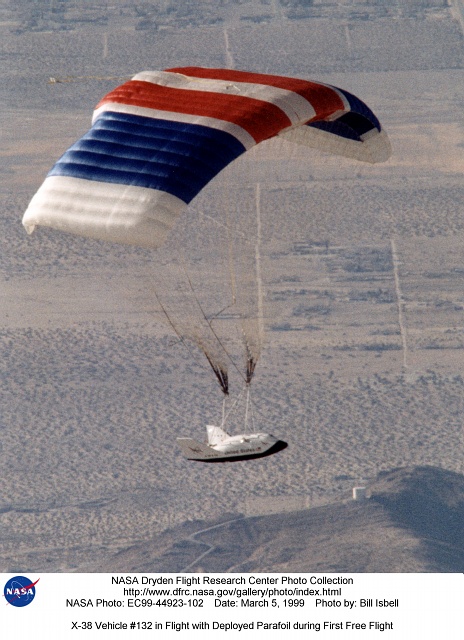
About a dozen years ago, when I was writing my Master's thesis for my highly marketable degree in writing poetry, I penned this poem. I've been thinking about it lately, for reasons I'll explain in a moment.
A Lone Survivor, Fleeing the Space Station after Tragedy, Recalls the Order CheloniaThe poem draws on an an article I read about a prototype escape pod for occupants of the space station, my flowering obsession with natural history and taxonomy, and a genuine desire to put down roots in one place instead of being, as I had been for many years as an undergraduate (three colleges, three states) and then as a graduate student, caught between places, not knowing where I was going to land.
The crispness of hatch-closing, and then in silence breaking away
she drops, half-scudding through the atmosphere,
the wingless airfoil plunging, she hopes, to open fields.
But there’s so much asphalt, so many hard cities unseen below.
She thinks perhaps the ocean will swallow her.
Perhaps is such a large word now:
she wears it, a one-piece zippered suit.
Warming, through the window she sees the hull glow ember-gold.
She slips faster, down. In her mind, she diagrams
the earth, the atmosphere, gravity’s certainties.
She flies as turtles swim, lift and drag balanced into descent.
She is in the belly of a turtle. What she has left behind—
she tries not to think of it—burns. She thinks, rather, of water,
the ocean, kelp, tides, California.
Outside, America grows toward her, suddenly large, mountainous, alarming.
No place for a chelonian. Why does she know that word?
Wonders why she knows that and not something useful, something like God.
She checks her watch and listens.
Amidst the roaring, a door, almost unheard, opens.
She imagines the people who took two weeks
to pack the hundreds of cables, the seven thousand square feet of silk.
Did they work at night? Were they tired, thoughtless, depressed?
Were their minds on their task those long warehouse days?
Two long minutes the cables untangle, the cloth unfurls;
whomping and foomping and hissing, it stutters a long perhaps.
Announces itself like love: I’ve been here all along.
The carapace bears up like an elevator.
Her earpiece crackles to life.
She says It’s me, I’m here, I’m home.
Swimming toward the sand, she presses her face against the pane
and, drawing back, is surprised by the silver reflection there: an imprint
of a ghost-bird caught in mid-flight, stunned
by the invisible shell of cold,
by all the things, having fallen, it suddenly knows.
A dozen years, two more degrees, a few more interstate adventures, seven years of marriage, and one child later, I find myself only a few blocks from where I originally wrote that poem about falling into place without being able to decide exactly where one will land.
But I promised to say why I've been thinking about the poem, about falling, about being a little bit out of control.
In January 2001, after (not) dealing with depression on and off for, oh, 17 years, I finally sought out--with much encouragement from Fang--the assistance of a therapist, who referred me to my doctor for a prescription for antidepressants.
My recovery felt miraculous. Whereas previously every day at work had the possibility of being a very bad one, suddenly I awoke feeling each day had promise. I recall that before antidepressants, a phone call I didn't feel like returning to a patron of the symphony orchestra where I worked would send me spiraling downward into blackness. I'd extrapolate my reluctance to return a phone call to a lifetime of phone calls to return for a series of low-paying nonprofit jobs where I would be warehoused in cubicles, which meant, of course, I would never, ever be able to pay off the student loans from my expensive undergraduate degree or my professionally useless poetry M.A. Those of you who have experienced depression know what I'm talking about, and those of you who haven't likely have witnessed someone falling into this vortex of negativity and despair.
Within months of starting the antidepressants, I was accepted to a shiny new Ph.D. program in a town I knew I liked, and I became engaged to Fang. There were other smaller milestones, too, ones I've forgotten now but which I remember made my therapist very happy. It was no coincidence she scheduled my weekly sessions for Friday afternoons--why shouldn't she finish her week on a high note?
Of course, antidepressants come with side effects, and after some time on Celexa, I decided it was time to shake off these byproducts and check in with my old self. I tried several times to wean myself from the drug, but every time found the withdrawal experience worse than the side effects of taking the pills. Plus, I tended to hit bottom again pretty quickly--usually within a week. I tried another type of antidepressant, hoping for more attractive side effects, but instead I experienced some of my darkest days ever.
Still, I wanted to get off the pills. After all, even when unmedicated, I had been an exceptionally high-functioning depressive. I may not have wanted to make those phone calls, but I did. There were certainly times in college where I wanted to burrow under the covers and not go to class, but I did--and I frequently finished papers for my courses a week before they were due. I may have been depressed, but dammit, I was driven.
Three weeks ago, when it was time to refill my prescription, I decided to leave a few emergency pills in the bottle and go cold turkey. I was slow to tell Fang, forgetting that I had promised him I would always alert him to these experiments, and hoping instead I could greet him one morning with the triumphant tale of how I'd been off the citalopram for a month. Aside from this major misstep, the going has been much, much better this time. Nausea, yes. Dizziness, yes. But bottoming out? Literally seeing dark shadows around people, as I had the last time I was withdrawing? Nope.
I'm still calibrating my emotions. The past week in particular I've had a hard time keeping the tears from welling up--but today I also laughed harder than I had in a long, long time.

This smile is brought to you by natural serotonin levels.*
In the face of furloughs, pay cuts, a husband recently diagnosed with scoliosis that will eventually require surgery to fuse some of his vertebrae together, my still-too-recent-and-raw failure to secure either the tenure-track humanities job for which I had trained for years or the couple of administrative jobs I dearly wanted, and so much other nastiness in the world, it may seem more than a little crazy to choose this moment to give up the drugs.
I'm feeling raw, I'm feeling a bit sad, but I'm also feeling like me. It's taken me 8.5 years, but I feel I'm ready to face the world without medicine that at first was a necessary life-changer and that was a life-saver post-partum, but which I fear in more recent years had become a crutch, a way of anesthetizing myself.**
I am, like the woman in the poem I wrote 12 years ago, experiencing re-entry, and right now I'm plunging through the atmosphere, feeling the heat burning up the old shell but also glorying in the light that only results from an almost unbearable friction with the world.


* And eight years of orthodontia.
** Please note: I'm absolutely not writing this post to dismiss the effectiveness of antidepressants or encourage anyone else to ditch their meds. My quitting has been a long time coming, and I'm ready for it; I alerted my doctor and have been monitoring my moods closely. Do not attempt withdrawal from psychotropic medicines on your own, as it's likely your experience will vary significantly from mine.
Monday, July 20, 2009
On destuckifying
"Destuckification" is a term Havi Brooks uses to describe the process of moving beyond harmful patterns and hurt:
Havi's recent post "Destuckifying a Hurt" provides seven initial steps for beginning to move through and past hurt.
A lot of people are hurting a lot more deeply than I am, of course, but I'm finding the method enlightening for working through my own issues with having a Ph.D. in the humanities and not being on the tenure track. (Because my readers know that earning a Ph.D. in the humanities and not landing a t-t job = FAILURE. I know this because Ph.D. students in many programs aren't trained to do anything but assume a t-t position and because waaaaay too many of my friends have been asked by senior faculty "Why are you getting a Ph.D. if you're not planning to teach?")
Even though I turned in my dissertation almost three years ago, and even though my t-t job market failures are a couple years behind me, I find I'm still holding on to that person I was supposed to be, the lit-savvy, slender American studies professor who is finishing her first book in the office of her affordable early 20th-century home in a charming small town anchored by an elite liberal arts college.
Um, yeah. Her.
Instead, I'm inhabiting a parallel universe, one where I counsel folks on teaching, teach regularly but not exclusively, and am subject to the whims of the California state budget and the UC bureaucracy. I like my work an awful lot, but I'm still plagued by the feeling that it's not quite what I'm supposed to be doing--as if I'm either supposed to be running a teaching center elsewhere or I'm supposed to stay in this lovely town but do something else.
So I'm destuckifying. Have been for some time, I know--evidence all my casting about for jobs and careers--but now I'm going to be more deliberate about it. I need to massage all the muscles knotted up to protect an old injury, then stretch them and get them used to new kinds of exercise.
Accordingly, I'm slowing down again, letting myself work more thoughtfully through the first three steps of Havi's:
Definitely check out her post and blog if you've been working through something for a while but find yourself stuck.
Destuckification is about the willingness to meet yourself where you are.
Even if where you are in that moment is not being able to get out of bed and do the thing already.
Even if where you are in that moment is not being able to sit with it.
Even if where you are in that moment is not being able to thank your pain for being there to teach you.
And if you can’t meet yourself where you are yet?
You recognize (or remind yourself) that this is okay too. That you’re practicing. That you are allowed to hate it. That you can take your time getting to the point where you’ll be able to implement some concept that you’ve learned.
Havi's recent post "Destuckifying a Hurt" provides seven initial steps for beginning to move through and past hurt.
A lot of people are hurting a lot more deeply than I am, of course, but I'm finding the method enlightening for working through my own issues with having a Ph.D. in the humanities and not being on the tenure track. (Because my readers know that earning a Ph.D. in the humanities and not landing a t-t job = FAILURE. I know this because Ph.D. students in many programs aren't trained to do anything but assume a t-t position and because waaaaay too many of my friends have been asked by senior faculty "Why are you getting a Ph.D. if you're not planning to teach?")
Even though I turned in my dissertation almost three years ago, and even though my t-t job market failures are a couple years behind me, I find I'm still holding on to that person I was supposed to be, the lit-savvy, slender American studies professor who is finishing her first book in the office of her affordable early 20th-century home in a charming small town anchored by an elite liberal arts college.
Um, yeah. Her.
Instead, I'm inhabiting a parallel universe, one where I counsel folks on teaching, teach regularly but not exclusively, and am subject to the whims of the California state budget and the UC bureaucracy. I like my work an awful lot, but I'm still plagued by the feeling that it's not quite what I'm supposed to be doing--as if I'm either supposed to be running a teaching center elsewhere or I'm supposed to stay in this lovely town but do something else.
So I'm destuckifying. Have been for some time, I know--evidence all my casting about for jobs and careers--but now I'm going to be more deliberate about it. I need to massage all the muscles knotted up to protect an old injury, then stretch them and get them used to new kinds of exercise.
Accordingly, I'm slowing down again, letting myself work more thoughtfully through the first three steps of Havi's:
1. You give yourself permission to be hurt.
You just stop and acknowledge what a hard thing this is — and you remind yourself that it’s natural and normal that this would hurt so much.
This is the most important step. And it’s hard.
So if you can’t give this situation permission to just be awful, that’s completely understandable. If you’re not there yet, that’s okay.
Maybe you can start with trying to giving yourself permission to not be able to let it be awful, and see if that starts to loosen things up a little.
2. Acknowledge how big it is.
It’s really easy (and tempting) to go straight into “I should really be over this already” and “why is this still such a big issue?”
Not so helpful.
It is a big deal. It is your big hurt.
So remind yourself:
“Even though I really just want to be over this already, I’m taking a moment to notice how much pain and grief I have from this hurt. No wonder I’m having trouble with this. There is a lot here.”
3. Notice things.
You’re going for mindful, compassionate noticing as opposed to noticing-and-making-judgments or just observing.
Definitely check out her post and blog if you've been working through something for a while but find yourself stuck.
Tuesday, June 30, 2009
Finding my place
I was the fourth generation of my mother's family to grow up on the same block in suburban Long Beach--and by "suburban" I don't mean tract homes, but rather an aggregation of abodes that I see now actually make up quite a charming and impressive neighborhood built on a traditional grid in the 1920s. We lived only a few blocks from the ocean, but the city's beaches, while indeed long, were not particularly noteworthy because the city had decades before built a jetty to serve as a breakwater. This chased the surfers, including my grandfather, down to beaches in Orange County. The city allowed the construction of palm-studded oil islands within the breakwater, and the Los Angeles river flushed--an apt verb, I assure you--into the harbor, ensuring that the beach's water quality merited an "F" grade after every storm.

It was, in short, far from my ideal place in which to grow up. By the time I made it to high school--in a magnet program in the "inner city," at Snoop Dogg's alma mater--I was tired of the schools' big iron gates, the razor wire atop the fences, the way the school buildings, thanks to the Field Act, Proposition 13, rising crime, and many years of Republican gubernatorial "leadership" that starved the schools of funds, were from the outside virtually indistinguishable from prisons.
I've told this story before. But what I haven't said is this: Growing up, I loved anyplace but where I was. And so I launched myself across the country, to a land of rolling green hills and brick buildings and deciduous trees, only to find I didn't find small-town Virginia any more interesting or less dangerous than urban Southern California.
By the time I ended up in Iowa in 1994, in my third college in three semesters in as many states, my parents had issued me an ultimatum: Make it work or move back home. Through writing poetry, through learning the history of a place, on long walks and by paying attention to the details of the sharp border where Iowa suburbs met monocultured farmland, I learned to love a place that was not, honestly, an easy place to love. The college, yes--the town and the state, not so much. There was too much sky, for one thing. And an awful lot of corn, soy, and alfalfa. Or empty, frozen, stubbled fields.
When I moved to the Sacramento Valley, in 1997 and again in 2001--with another sojourn in Iowa in between--I had already learned the lessons in loving the land. I was enrolled in a creative writing program, and in the class were people who wrote beautifully and passionately about place, including one woman who found beauty in the heat and star thistles and the raspy calls of scrub jays.


I learned, grudgingly, to tolerate the dust and heat, to find some charm in the lane of gnarled olive trees whose trunks shelter swarms of bees, the dust that coats everything, the odd grafting of English walnut onto black walnut trunks, the llamas and peacocks and zorses and camels that turned up on the patchwork of tiny ranches.

But I always thought I'd leave eventually. And I've been trying, desperately, to find a cooler, less dusty, more coastal--and yet more affordable--place to settle, but I keep getting pulled back into California, into this valley. I'm wondering if it's time to put down more than shallow roots here, to irrigate deeply, to learn to really love this place where I've now spent a decade, to accept it as home. The clock is ticking, as Lucas starts school within the next couple of years, and I don't want to move him around much after he begins to make friends.
I also have a good number of colleagues who I suspect will become lifelong friends if I let them--a rare thing, I think, in a town that is host to a second-tier university that many people see as being a place they pass through on the way to someplace more hospitable.
But oh, the rocky coast, the beaches, the coastal oaks, all the landscapes about which Robinson Jeffers wrote. . . Pelicans, seagulls, sandpipers, otters, sea lions, tidepools, sea hares, starfish! How much I want to inhale the briny breezes.
It's hard to always long for grass that is literally greener, but to find myself in this dry, brittle place that is, surprisingly, so very fertile in so many other ways. I have decisions to make, and soon. I want to settle without being settled.
What about you? Have you found your place? How did you recognize it as such?
Photo credits: Long Beach harbor, scrub jay, star thistle, strawberries for sale

It was, in short, far from my ideal place in which to grow up. By the time I made it to high school--in a magnet program in the "inner city," at Snoop Dogg's alma mater--I was tired of the schools' big iron gates, the razor wire atop the fences, the way the school buildings, thanks to the Field Act, Proposition 13, rising crime, and many years of Republican gubernatorial "leadership" that starved the schools of funds, were from the outside virtually indistinguishable from prisons.
I've told this story before. But what I haven't said is this: Growing up, I loved anyplace but where I was. And so I launched myself across the country, to a land of rolling green hills and brick buildings and deciduous trees, only to find I didn't find small-town Virginia any more interesting or less dangerous than urban Southern California.
By the time I ended up in Iowa in 1994, in my third college in three semesters in as many states, my parents had issued me an ultimatum: Make it work or move back home. Through writing poetry, through learning the history of a place, on long walks and by paying attention to the details of the sharp border where Iowa suburbs met monocultured farmland, I learned to love a place that was not, honestly, an easy place to love. The college, yes--the town and the state, not so much. There was too much sky, for one thing. And an awful lot of corn, soy, and alfalfa. Or empty, frozen, stubbled fields.
When I moved to the Sacramento Valley, in 1997 and again in 2001--with another sojourn in Iowa in between--I had already learned the lessons in loving the land. I was enrolled in a creative writing program, and in the class were people who wrote beautifully and passionately about place, including one woman who found beauty in the heat and star thistles and the raspy calls of scrub jays.


I learned, grudgingly, to tolerate the dust and heat, to find some charm in the lane of gnarled olive trees whose trunks shelter swarms of bees, the dust that coats everything, the odd grafting of English walnut onto black walnut trunks, the llamas and peacocks and zorses and camels that turned up on the patchwork of tiny ranches.

But I always thought I'd leave eventually. And I've been trying, desperately, to find a cooler, less dusty, more coastal--and yet more affordable--place to settle, but I keep getting pulled back into California, into this valley. I'm wondering if it's time to put down more than shallow roots here, to irrigate deeply, to learn to really love this place where I've now spent a decade, to accept it as home. The clock is ticking, as Lucas starts school within the next couple of years, and I don't want to move him around much after he begins to make friends.
I also have a good number of colleagues who I suspect will become lifelong friends if I let them--a rare thing, I think, in a town that is host to a second-tier university that many people see as being a place they pass through on the way to someplace more hospitable.
But oh, the rocky coast, the beaches, the coastal oaks, all the landscapes about which Robinson Jeffers wrote. . . Pelicans, seagulls, sandpipers, otters, sea lions, tidepools, sea hares, starfish! How much I want to inhale the briny breezes.
It's hard to always long for grass that is literally greener, but to find myself in this dry, brittle place that is, surprisingly, so very fertile in so many other ways. I have decisions to make, and soon. I want to settle without being settled.
What about you? Have you found your place? How did you recognize it as such?
Photo credits: Long Beach harbor, scrub jay, star thistle, strawberries for sale
Tuesday, June 09, 2009
Age 34
I turned 34 a week ago, and passing into the second 2/3 of (very optimistically) 100 years has made me more reflective than usual. I used to be a deeply introspective person, but then I entered a Ph.D. program, got married, and had a child. Now I work 150% time during the school year, 100% during the summer. Which means: Lots of distractions.
I also used to think of myself as a writer, whereas now I think of myself as a blogger. There are bloggers who elevate blogging to an art, to writing. I'd like to be a writer again, someone who's thoughtful and more in touch with--more aware of--her authentic self, whomever she may be.
As regular readers know, I've been casting about for a different situation. (In a nutshell: I love my job, not sure of how well its future and mine intersect.) Later this month, I have a job interview to be director of a new, large, and relatively well-funded nonprofit learning institute, and the more I prepare for the marathon, 1.5-day interview, the more I realize I would probably be quite good at that job and would really enjoy the challenge. But is it right for me? Am I right for the folks down there? Only time, and a damn good interview, will tell.
At the same time, I'm increasingly being asked to take leadership responsibilities on the campus where I work in the teaching center. There's the "accessibility czar" position I've been all but offered that would actually allow me to move into even more of a leadership--but not necessarily bureaucratic--role on campus. And today someone told me she'd like to nominate me to be chair of the campus committee on the status of women at the university. I doubt I'll get that position--after all, I've missed most of the meetings (and will miss this month's) because I've been off conferencing--but it's nice to be thought of as a candidate.
Still, while I'm always looking for opportunities, I'm already feeling too busy. I love spending time with Lucas and Fang, but I need more time to reflect, to read, to think, to write, to be whomever I am when I'm not always writing reports or reading master's theses.
Summer is a good time to recommit to these pursuits, and so I will. . .as soon as I get these last two master's theses read. I have several dozen books on deck, and have already finished a couple of novels I'd recommend--the fascinating The Enchantress of Florence by Salman Rushdie and the quiet The Elegance of the Hedgehog by Muriel Barbery (trans. Alison Anderson). Next up: The BLDG BLOG Book by Geoff Manaugh of the fabulous BLDGBLOG. (What? You don't read BLDGBLOG? Come on--you like cool pictures, don't you? And urban futurism?)
Expect more posts of substance soon--especially since I've been asked (and am honored) to be a featured blogger at the upcoming New Media Consortium summer conference. Interested in reading more about the conference? Check out the also-featured blogs of the esteemed company I'll be keeping: Gardner Campbell, director of the Baylor Academy for Teaching and Learning and Chris Lott, a "disruptive technologist" (I kid you not--that's his title) at the University of Alaska. Also attending the conference--and as usual my partners in crime for an un-presentation on [insert whatever it is we end up talking about here]--are Barbara Sawhill from Oberlin's language lab and Laura Blankenship, formerly of Bryn Mawr and now the founder of Emerging Technologies Consulting. I'm looking forward to a couple days spent in the company of a few hundred people who really care about teaching and learning with technology.
I also used to think of myself as a writer, whereas now I think of myself as a blogger. There are bloggers who elevate blogging to an art, to writing. I'd like to be a writer again, someone who's thoughtful and more in touch with--more aware of--her authentic self, whomever she may be.
As regular readers know, I've been casting about for a different situation. (In a nutshell: I love my job, not sure of how well its future and mine intersect.) Later this month, I have a job interview to be director of a new, large, and relatively well-funded nonprofit learning institute, and the more I prepare for the marathon, 1.5-day interview, the more I realize I would probably be quite good at that job and would really enjoy the challenge. But is it right for me? Am I right for the folks down there? Only time, and a damn good interview, will tell.
At the same time, I'm increasingly being asked to take leadership responsibilities on the campus where I work in the teaching center. There's the "accessibility czar" position I've been all but offered that would actually allow me to move into even more of a leadership--but not necessarily bureaucratic--role on campus. And today someone told me she'd like to nominate me to be chair of the campus committee on the status of women at the university. I doubt I'll get that position--after all, I've missed most of the meetings (and will miss this month's) because I've been off conferencing--but it's nice to be thought of as a candidate.
Still, while I'm always looking for opportunities, I'm already feeling too busy. I love spending time with Lucas and Fang, but I need more time to reflect, to read, to think, to write, to be whomever I am when I'm not always writing reports or reading master's theses.
Summer is a good time to recommit to these pursuits, and so I will. . .as soon as I get these last two master's theses read. I have several dozen books on deck, and have already finished a couple of novels I'd recommend--the fascinating The Enchantress of Florence by Salman Rushdie and the quiet The Elegance of the Hedgehog by Muriel Barbery (trans. Alison Anderson). Next up: The BLDG BLOG Book by Geoff Manaugh of the fabulous BLDGBLOG. (What? You don't read BLDGBLOG? Come on--you like cool pictures, don't you? And urban futurism?)
Expect more posts of substance soon--especially since I've been asked (and am honored) to be a featured blogger at the upcoming New Media Consortium summer conference. Interested in reading more about the conference? Check out the also-featured blogs of the esteemed company I'll be keeping: Gardner Campbell, director of the Baylor Academy for Teaching and Learning and Chris Lott, a "disruptive technologist" (I kid you not--that's his title) at the University of Alaska. Also attending the conference--and as usual my partners in crime for an un-presentation on [insert whatever it is we end up talking about here]--are Barbara Sawhill from Oberlin's language lab and Laura Blankenship, formerly of Bryn Mawr and now the founder of Emerging Technologies Consulting. I'm looking forward to a couple days spent in the company of a few hundred people who really care about teaching and learning with technology.
Sunday, April 19, 2009
Food for thought
In a column in today's New York Times, Pamela Slim of Escape from Cubicle Nation shares this insight:
That's going up on my office wall as I calculate my next moves.
Real creative urges, those we are meant to express, don’t go away. If ignored, they bother us, affect our health, fester and eventually turn us into the living dead.
That's going up on my office wall as I calculate my next moves.
Tuesday, January 20, 2009
Eleventh hour
As I write this from my outpost on the Left Coast, less than one hour remains in the final full day of the Bush administration. I am excited about tomorrow's inauguration but also melancholy that while collectively we as Americans started a movement to elect a progressive new President, we also let the past eight years happen--with protest, yes, but what an ugly eight years.
During those eight years Mr. Trillwing and I married. Lucas was born. I finished my Ph.D.
They've been good years for us as a family. But I can't help but think Lucas has been born under a bad star, some ill alignment of the planets, that will inflect the rest of his life.
And so, to borrow a phrase from the Friends, tonight I am holding President-Elect Obama in the light. Those of you who know me well know that I am not a believer in any traditional conception of god, but that there's something about the silent meetings and reflective practice of Quakers that I find very attractive. But I know that President Obama is a believer, so I want to hold him in the light in the hopes that he retains the strength to restore justice, peace, and prosperity to all the American people.
Accordingly, I offer to the President-Elect and to the country, these tidbits of testimony and wisdom from Friends and others.
On patience with the new President:
"When [Susan B.] Anthony was once asked, "Do you pray?" she responded, "I pray every second of my life; not on my knees, but with my work. My prayer is to lift women to equality with men. Work and worship are one with me." (Hugh Barbour et. al, 1995, cited in Whitmire)
On taking action:
During those eight years Mr. Trillwing and I married. Lucas was born. I finished my Ph.D.
They've been good years for us as a family. But I can't help but think Lucas has been born under a bad star, some ill alignment of the planets, that will inflect the rest of his life.
And so, to borrow a phrase from the Friends, tonight I am holding President-Elect Obama in the light. Those of you who know me well know that I am not a believer in any traditional conception of god, but that there's something about the silent meetings and reflective practice of Quakers that I find very attractive. But I know that President Obama is a believer, so I want to hold him in the light in the hopes that he retains the strength to restore justice, peace, and prosperity to all the American people.
Accordingly, I offer to the President-Elect and to the country, these tidbits of testimony and wisdom from Friends and others.
On patience with the new President:
On community as Americans, and on the power of the individual:
"We need to be willing to be led into the dark as well as through green pastures and by still waters." (Gordon Matthews, 1987, cited in Plain Living by Catherine Whitmire)
"A culture of isolated individualism produces mass conformity because people who think they must bear life all alone are too fearful to take the risks of self-hood. But people who know that they are embedded in an eternal community are both freed and empowered to become who they were born to be." (Parker Palmer, 2000, cited in Whitmire)On international conflict (and partisan politics):
"The best definition I've ever heard for forgiveness is giving up the right to hurt someone for the hurt they've done to you." (Joyce Sams, 1994, cited in Whitmire)On work as spiritual calling:
"When [Susan B.] Anthony was once asked, "Do you pray?" she responded, "I pray every second of my life; not on my knees, but with my work. My prayer is to lift women to equality with men. Work and worship are one with me." (Hugh Barbour et. al, 1995, cited in Whitmire)
On taking action:
Let us all take off from here.
You are fasted now, light-headed, dangerous.
Take off from here. And don't be so earnest,
so ready for the sackcloth and the ashes.
Let go, let fly, forget.
You've listened long enough. Now strike your note.
(from section XII of Seamus Heaney's Station Island)
Thursday, December 04, 2008
Prop 8: The Musical
Chances are you'll recognize many actors in this performance:
(h/t Professor Kim)
See more Jack Black videos at Funny or Die
(h/t Professor Kim)
Saturday, October 25, 2008
Weepy
When I feel overwhelmed with work--and I definitely am overcommitted right now with responsibilities--it's easy to feel depressed. But sometimes, late at night, when the morning's antidepressant has worn off, I can get downright weepy with slight provocation.
Tonight's weepfest is brought to me by Pete Seeger's latest album, At 89, and more specifically the song "Little Fat Baby." Here are the lyrics:
If you're a parent, I challenge you to download the song from iTunes and not weep.


Tonight's weepfest is brought to me by Pete Seeger's latest album, At 89, and more specifically the song "Little Fat Baby." Here are the lyrics:
Someday, you'll be able to walk
Someday, you'll be able to talk
No more diapers, you will wear pants
You'll be able to sing and dance
And then, oh then, oh then, oh then
I'll wish I had that little fat baby
In my arms again
Someday, you're going to be fully grown
Someday, you will be leaving this home
No more clamoring up the stair
No more clothes strewn everywhere
And then, oh then, oh then, oh then
I'll wish I had that tough teenager
In my arms again
Someday, you'll have a child of your own
Someday, you'll know the things that I've known
And grandmother will help you through
As your child grows as all children do
And then, oh then, oh then, oh then
You'll wish you had your little fat baby
In your arms again
Someday, we will be saying so long
Someday, it'll be time for me to move on
No more discussions over a glass of beer
No more generation gaps appear
And then, oh then, oh then, oh then
You'll wish you had your dear sweet papa
In your arms again
Someday, you'll be able to walk
Someday, you'll be able to talk
No more will you poop in your pants
You'll be able to sing and dance
And then, oh then, oh then, oh then
I'll wish I had that little fat baby
In my arms again
If you're a parent, I challenge you to download the song from iTunes and not weep.


Friday, September 12, 2008
How to frame college for first-year students?
Steve Greenlaw has a very thought-provoking post about engaging students early in a first-year seminar up at Pedablogy. I started to leave this post as a comment there, but it became too long, so I'm posting it here instead.
Sounds like a very interesting course.
My first year of being in a Ph.D. program was at the University of Iowa, and I was assigned to instruct two sections of my own course (with no prior teaching experience--eeek!) in the university's General Education in Literature Program. They had a pretty good mentoring program set up, and one of the faculty told us that our primary job was not necessarily to teach literature (even though we had to cover four genres in the class, teach one Shakespearean play, etc.), but rather to re-instill in students the love of reading they probably had as little kids. So in my class we talked about what they read as kids, why they liked the books they did, and at what point--and why--they stopped reading literature for fun. One student from Michigan had last finished a book in eighth grade: Lord of the Flies. The conversation was eye-opening for me. But taking that little walk down memory lane really helped the students reconnect with words and the place (I felt) literature should have in their lives.
Connecting students with their high school experience is trickier because there's such a wide range of experiences. I don't think it will backfire on you, but to be honest, one of the reasons I left the University of Mary Washington after a single semester is because the classes I happened to take didn't challenge me a whole lot. They were easier than my high school classes. Like your student, I was one of the last to register, and so I ended up in classes that weren't my first picks. I was interested in the topics, and became more interested in them as the semester progressed, but they lacked intellectual rigor and opportunities for self-reflection. They felt like general ed classes. (I wish I had taken one of your classes instead!) My point is that comparing college to high school would have been (a) difficult for me because I was still learning what college was all about--for example, I didn't know that college students only attended class for 12-16 hours a week; I thought it was going to be more like high school, with class all day, and (b) even if I did have some college experience under my belt, my high school classes were more thought-provoking than the college classes I was taking, so the comparison wouldn't have been a favorable one. That said, the questions would have helped me better frame my experience and think earlier rather than later about what I was supposed to be getting out of college.
The college I finally did graduate from--Grinnell--eschewed general ed requirements in favor of trusting students to choose their own paths. We weren't allowed to overdose in any one department (I think 48 credits was the max allowed per department) or division, but our only requirements were a first-year tutorial (which I didn't take because I entered as a sophomore) and whatever requirements were required for our major. And because of the type of student who attended that college, most of us took a very broad range of classes. The stats--and my memory is a bit fuzzy about these--during my tenure there were something like 90 percent of students took math courses and 95 percent took literature courses.
If I were teaching a first-year seminar (and I hope to do so for the first time this spring), I think I would feel compelled to provide the students with a critique of the university system of which they were a part. At my current institution, we have a boatload of general ed requirements--of which first-year seminars are not one. But I would want to ask students why the general education requirements are in place, what is the meaning of a liberal arts education (and can you really get such a thing at a university with class sizes as large as 750)?
My big question for you is this: Are you going to lead students away from a discussion on personal responsibility and move them toward one about possibility and social responsibility? Grinnell framed this nicely for us as incoming students by explicitly framing our experience and privilege as training for community service of all stripes or, as the college calls it in its mission statement, "the common good." That was an awakening for me. I wish someone had told me earlier that my college education was not really about me. Yes, my college years were an excellent time to reflect and grow, but that reflection and growth was in service of a higher ideal--not to get a job, not to get a degree, not to please my parents, not to be recognized as the graduate of an elite liberal arts college, but rather to figure out how best to serve people. I chose education. When I read my class's alumni newsletter, I'm thrilled to see how many people, even 11 years after graduation, are teaching or working for nonprofits or for the government or as doctors or who performed service abroad or who practice law in the public interest.
At our commencement, our speaker, David McCullough, told us that within a week some jerk would say, "Welcome to the real world." He reminded us that the liberal arts endeavor, with its intellectual challenges and cultural critiques and ethic of service, was the real world. I don't think enough undergrads at my current institution share McCullough's view.
Steve, you're a very reflective teacher, and I'm sure whatever path you take with your students, the course will be one they look back on with fondness. Thanks for the invitation to share some thoughts!
Sounds like a very interesting course.
My first year of being in a Ph.D. program was at the University of Iowa, and I was assigned to instruct two sections of my own course (with no prior teaching experience--eeek!) in the university's General Education in Literature Program. They had a pretty good mentoring program set up, and one of the faculty told us that our primary job was not necessarily to teach literature (even though we had to cover four genres in the class, teach one Shakespearean play, etc.), but rather to re-instill in students the love of reading they probably had as little kids. So in my class we talked about what they read as kids, why they liked the books they did, and at what point--and why--they stopped reading literature for fun. One student from Michigan had last finished a book in eighth grade: Lord of the Flies. The conversation was eye-opening for me. But taking that little walk down memory lane really helped the students reconnect with words and the place (I felt) literature should have in their lives.
Connecting students with their high school experience is trickier because there's such a wide range of experiences. I don't think it will backfire on you, but to be honest, one of the reasons I left the University of Mary Washington after a single semester is because the classes I happened to take didn't challenge me a whole lot. They were easier than my high school classes. Like your student, I was one of the last to register, and so I ended up in classes that weren't my first picks. I was interested in the topics, and became more interested in them as the semester progressed, but they lacked intellectual rigor and opportunities for self-reflection. They felt like general ed classes. (I wish I had taken one of your classes instead!) My point is that comparing college to high school would have been (a) difficult for me because I was still learning what college was all about--for example, I didn't know that college students only attended class for 12-16 hours a week; I thought it was going to be more like high school, with class all day, and (b) even if I did have some college experience under my belt, my high school classes were more thought-provoking than the college classes I was taking, so the comparison wouldn't have been a favorable one. That said, the questions would have helped me better frame my experience and think earlier rather than later about what I was supposed to be getting out of college.
The college I finally did graduate from--Grinnell--eschewed general ed requirements in favor of trusting students to choose their own paths. We weren't allowed to overdose in any one department (I think 48 credits was the max allowed per department) or division, but our only requirements were a first-year tutorial (which I didn't take because I entered as a sophomore) and whatever requirements were required for our major. And because of the type of student who attended that college, most of us took a very broad range of classes. The stats--and my memory is a bit fuzzy about these--during my tenure there were something like 90 percent of students took math courses and 95 percent took literature courses.
If I were teaching a first-year seminar (and I hope to do so for the first time this spring), I think I would feel compelled to provide the students with a critique of the university system of which they were a part. At my current institution, we have a boatload of general ed requirements--of which first-year seminars are not one. But I would want to ask students why the general education requirements are in place, what is the meaning of a liberal arts education (and can you really get such a thing at a university with class sizes as large as 750)?
My big question for you is this: Are you going to lead students away from a discussion on personal responsibility and move them toward one about possibility and social responsibility? Grinnell framed this nicely for us as incoming students by explicitly framing our experience and privilege as training for community service of all stripes or, as the college calls it in its mission statement, "the common good." That was an awakening for me. I wish someone had told me earlier that my college education was not really about me. Yes, my college years were an excellent time to reflect and grow, but that reflection and growth was in service of a higher ideal--not to get a job, not to get a degree, not to please my parents, not to be recognized as the graduate of an elite liberal arts college, but rather to figure out how best to serve people. I chose education. When I read my class's alumni newsletter, I'm thrilled to see how many people, even 11 years after graduation, are teaching or working for nonprofits or for the government or as doctors or who performed service abroad or who practice law in the public interest.
At our commencement, our speaker, David McCullough, told us that within a week some jerk would say, "Welcome to the real world." He reminded us that the liberal arts endeavor, with its intellectual challenges and cultural critiques and ethic of service, was the real world. I don't think enough undergrads at my current institution share McCullough's view.
Steve, you're a very reflective teacher, and I'm sure whatever path you take with your students, the course will be one they look back on with fondness. Thanks for the invitation to share some thoughts!
Monday, September 01, 2008
Happiness is. . .
. . .a successful potty-training boot camp. We're on the road away from diapers. Woohoo!
. . .new shade plants in the garden.
. . .a dozen broccoli plants in the ground.
. . .big tomatoes (finally) ripening on the three tomato plants, with indications of tomatoes for at least the next month.
. . .an honest-to-goodness ear of corn growing in my sad, stunted little plot of corn. (More than half the seeds I planted were discovered by scrub jays, so I'm lucky anything grew at all.)
. . .lots of baby watermelons.
. . .baking chocolate chip cookies for an almost 3-year-old who is wearing big-boy underpants instead of diapers.
. . .a weekend of 81- and 85-degree days after a Thursday and Friday hovering around 105 degrees.
. . .strong, but not fierce, breezes to accompany these spring-like temperatures. My favorite weather!
. . .a sprint through Ann Taylor and Ann Taylor Loft (to replace my favorite pair of Ann Taylor pants, which Obi chewed up) during a sale, coupons in hand. ~$350 netted me five pairs of fabulous pants (a real achievement for me), three shirts, a lovely green cardigan, a barrette, and a necklace. Plus I now have six coupons--which I can use all at once--for $25 off each $50 I spent at Ann Taylor Loft during the next six weeks or so. Yes--that means if I can scrape together $150, I get $300 worth of clothes from a place that seems to make slacks just for my paunchy belly, flat butt, and longish legs. W00t. (Lest you think I'm a big spender on new clothes, I tend to shop twice a year and buy everything I need to fill the holes in my wardrobe for two or three seasons.)
. . .a nice BBQ with friends--at their house.
. . .seeing Lucas play without fear in the bounce house at our friends' BBQ.
. . .a weekend where Obi didn't destroy too many things. I think he's going to be a puppy for a long, long time.
. . .reconnecting, however briefly, with a couple of creative pursuits.
How was your weekend?
. . .new shade plants in the garden.
. . .a dozen broccoli plants in the ground.
. . .big tomatoes (finally) ripening on the three tomato plants, with indications of tomatoes for at least the next month.
. . .an honest-to-goodness ear of corn growing in my sad, stunted little plot of corn. (More than half the seeds I planted were discovered by scrub jays, so I'm lucky anything grew at all.)
. . .lots of baby watermelons.
. . .baking chocolate chip cookies for an almost 3-year-old who is wearing big-boy underpants instead of diapers.
. . .a weekend of 81- and 85-degree days after a Thursday and Friday hovering around 105 degrees.
. . .strong, but not fierce, breezes to accompany these spring-like temperatures. My favorite weather!
. . .a sprint through Ann Taylor and Ann Taylor Loft (to replace my favorite pair of Ann Taylor pants, which Obi chewed up) during a sale, coupons in hand. ~$350 netted me five pairs of fabulous pants (a real achievement for me), three shirts, a lovely green cardigan, a barrette, and a necklace. Plus I now have six coupons--which I can use all at once--for $25 off each $50 I spent at Ann Taylor Loft during the next six weeks or so. Yes--that means if I can scrape together $150, I get $300 worth of clothes from a place that seems to make slacks just for my paunchy belly, flat butt, and longish legs. W00t. (Lest you think I'm a big spender on new clothes, I tend to shop twice a year and buy everything I need to fill the holes in my wardrobe for two or three seasons.)
. . .a nice BBQ with friends--at their house.
. . .seeing Lucas play without fear in the bounce house at our friends' BBQ.
. . .a weekend where Obi didn't destroy too many things. I think he's going to be a puppy for a long, long time.
. . .reconnecting, however briefly, with a couple of creative pursuits.
How was your weekend?
Subscribe to:
Posts (Atom)