Showing posts with label I heart material culture. Show all posts

Tuesday, November 30, 2010

On winter fashion

Brrrrrrrrrr! It's been cold here; a few days ago it was hovering in the single digits. It's back up to 30 degrees now, but there's more snow coming down. With the snow already on the ground, we'll probably wake up to 7 or 8 inches of snow tomorrow morning. It'll make for a white-knuckle, icy drive down the hill to preschool and campus.

Is it any wonder, then, that a pair of these Timberland boots, which arrived in the mail yesterday, are among my new favorite things?


I adore them.

They're a lot more practical than the peep-toe stilettos I saw a woman wearing today on campus when it was snowing and about 25 degrees. And they keep my legs warm, unlike the leggings I keep seeing women students wear without pants or skirts. This look, I might point out, is much appreciated by some of the 50- through 70-something men on campus; I've seen them turn around or cock their heads to leer at undergraduate ass on half a dozen occasions since it became cold and the leggings made their debut.

And so, a couple of public service messages for the local undergrads:


Again: Idaho, you're welcome.

Tuesday, July 06, 2010

How do you use history?

I'm kind of thinking aloud here, and as an academic I'm hesitant to put baby ideas into print, even virtually, but I'd like to hear your thoughts.

In a month I set off on the tenure track in history, with a trifold focus on U.S., gender, and (especially) public history.

Whereas public historians traditionally have done history for the public--e.g. in museum exhibits or in documentary films--there's a small but growing group of public historians who want to foster and study history done by the public, by passionate amateurs and average folks instead of created for them. I'm one of those historians, and as I transition to life on the tenure track (I'll have 4-5 years to prove I deserve to be employed for the next 30-35 years), I'm searching for a project or two in which I can make significant progress in 3-4 years.

I'm hoping you can help me by telling me a bit about how you use history in your life, either everyday or on special occasions. I want to find a project that not only interests me, but that really gets people excited about engaging with the history of their family, neighborhood, house, community, hobby, or whatever else they're passionate about.

Just FYI, clusters of things that have piqued my interest thus far, in no particular order:

The use of mobile devices to experience additional "layers" of a place

- augmented reality
- GPS-enabled smartphones that provide text or video about a place
- smartphone apps that let people contribute their own stories about a place while they're in it

Crowdsourcing histories

- Davis Wiki does this in cataloging the present and past of an entire city, with no aspirations to objectivity
- The public's use of virtual spaces like the Smithsonian Commons or the Powerhouse Museum's collections database--creating new taxonomies and folksonomies, repurposing historic material in creative ways

Conservatives' uses and abuses of history and historiography

- The Texas school board's revision of the history and social studies curriculum to deemphasize the contributions of people of color and to lionize some very bigoted people.
- The Arizona law that implicitly forbids the teaching of many kinds of ethnic studies.
- Glenn Beck and the Tea Partiers' reinscription of white male privilege in the American historical narrative

The thousands of ways people use history in everyday life, sometimes without realizing they're doing history

- Connecting to their past through personally or communally resonant objects
- Historical reenactment
- Video games, simulations, or alternate reality games inspired by historical places or events
- Communities of genealogists
- Memorials, formal and informal
- Oral histories gathered by amateurs
- Scrapbooking and photo albums

I'm really curious about what happens if a historian (me!) approaches conservatives' uses of history almost at face value, with a good deal of curiosity rather than immediate criticism (academics' typical first response). I'll be living in one of the country's most conservative states, and I'm wondering if there are ways I might engage with some of the more conservative groups in constructing historical projects and programs that

a) are meaningful to them
b) depend on their participation

but also

c) are packed with opportunities for people to learn to do history in more rigorous ways, rather than stick to simplistic K-12 textbook views (or Fox News' views) of history
d) get participants to think critically and creatively about people, places, and events, in light of existing evidence or evidence they've gathered (e.g. through oral histories)
e) prod people on the ends of the political spectrum to engage with one another's stories and in important conversations about community, through historical research and production

Regardless of your political persuasion, if you had access to an eager, energetic, and open-minded historian who wanted to work with you and your friends/neighbors/affinity community on a meaningful project, what might that project or program look like, and why?

Thanks so much. I can't wait to see what my brilliant and creative readers share.

Saturday, March 28, 2009

How can we make higher ed more accessible?

Last weekend, I had the opportunity to attend the International Technology and Persons with Disabilities Conference, and I had the privilege of accompanying an academic mentor and friend of mine, Catherine Kudlick, a professor who is partially sighted and who is a superstar in the academic world of disability studies--you can read her insightful essay on blind boot camp to get a sense of her thoughtfulness about blindness and gender.

Cathy and I found ourselves at the conference primarily because she is chairing my university's new steering committee on electronic accessibility, a committee on which I sit and for which I chair the teaching and learning subcommittee. In hopes of learning where best to invest our resources, the campus's Information and Educational Technology division is investing a good deal of thought and energy into researching what's going on elsewhere in promoting universal access on college and university campuses.

I have to admit that, as someone whose decrease in vision can be fixed with a simple pair of glasses or contacts and as someone who is not current on the lingo in either disability studies or the various communities of people with disabilities, I was a bit nervous about attending the conference. Intensely curious and wanting to learn more, but nervous. (I soon learned that with Cathy as my very forgiving guide, I really had no need to worry. I was especially delighted when she took me to a fascinating discussion at a sci-fi literary salon for the blind.)

We spent two days at the conference, the first entirely on our feet as we explored four huge ballrooms of vendors selling technologies designed for people with disabilities ranging from dyslexia to autism to paralysis to blindness. I'm reasonably tech savvy, and knowing about all the cool mainstream technologies out there as well as believing there had to be a huge market for some of these assistive technologies, I was ready to be blown away by the awesomeness of various devices.

But: not so much with the awesomeness. The technology--and I know I'm not the first to note this, but it bears repeating--was infantilizing. It wasn't always clear to me which technologies were geared toward children and which were for adults. Pictographs looked like they came out of children's books. Devices featured high-contrast primary colors that looked more at home, in my experience, on babies' toys than on any device an adult would want to be seen with, even if the devices' primary market seemed to me to be people who were completely blind. Many of the devices for the blind seemed oversized. In addition, many vendors offered only mild variations on an unimaginative theme. As we made our way through the exhibition halls, I became increasingly jaded and--I admit--a bit sarcastic.

The next day, while having coffee with Cathy and a fabulous colleague to whom she had introduced me the night before, I couldn't help but comment. They asked me what I thought about what I'd seen and heard, and I described a series of particularly large-buttoned, plastic devices, each of which hung at the waist from a nylon shoulder strap. They looked like little accordions. I said I found the photos on the printed advertising materials particularly frustrating; to me they sent the message, "I'm blind! I can't do anything but stand on a corner and play this accordion!" To my relief, my reaction elicited knowing chuckles from my companions.

That day, we attended conference sessions by universities that had made greater strides in universal design and access than our institution has. I heard some very inspiring and interesting ideas from universities on the forefront of making learning accessible to all students.

For example, advocates of universal design at the University of Texas at Austin have not only provided guidelines on making websites accessible regardless of whether they use HTML or rich media, but have made available a dashboard through which campus webmasters can compare their sites' accessibility with others on campus. UTA has encouraged a spirit of competition among the webmasters and has offered webmasters scholarships to AccessU, Knowbility’s annual training institute that aims to make the web empowering for all people.

San José State University also has made a concerted effort at improving the accessibility of instructional materials. The Center for Faculty Development hosts faculty in residence specializing in the accessibility of instructional materials and offers a ton of resources on making instructional materials accessible. Faculty can, for example, learn how to create a PDF that is readable by text-to-voice software.

As a teaching consultant at my university, I must admit I'm dreading the day when the university system mandates universal design. Don't get me wrong--I want the university to embrace universal design, but I'm not looking forward to working with faculty who see overhauling their learning materials as just one. more. thing. they have to do.

Thanks to Cathy's chairing of the campus's electronic accessibility committee, we're taking a different approach. With faculty, we're trying to avoid the language of mandates and compliance and liability and instead talk about opportunities and social justice. What new opportunities open up for all students when we explicitly consider students with disabilities in our course planning, and when we think less about "accommodating" those students than we do about changing the ways we teach to better challenge all students?

What such challenges may look like, I'm still trying to figure out. For example, I'm also working on a visual literacy initiative at my university. Along with another mentor of mine, Professor of Education and visual sociologist Jon Wagner, I'm now thinking about the intersection of universal design principles with the campus's recent incorporation of visual literacy into its general education requirements. Should the university be thinking about multimodal and multimedia literacies instead of focusing on literacies that rely on one sense? And shouldn't all students be developing aural literacies as well as visual ones?

There are a kajillion resources on universal design, but based on my recent research, I recommend these:

Knowbility's blog addresses technology issues as wide-ranging as Facebook's recent redesign, an accessible version of Twitter, and universal design in voting.

Glenda Sims (the goodwitch), "the self-appointed web standards evangelist and accessibility goddess" at the University of Texas at Austin--who also was one of the speakers at the conference--writes about the twin frustration and satisfaction of educating software vendors about accessibility.

Visit As Your World Changes, where the blogger is adjusting to vision loss "with class, using technology."

AccessibleWorld.org "seeks to educate the general public, the disabled community and the professionals who serve them by providing highly relevant information about new products, services, and training opportunities designed specifically to eliminate geographic and access barriers that adversely affect them."

Finally, my favorite find of this evening is Aimee Mullins's latest TED talk, in which she talks about prosthetics as delivery mechanisms for superpowers (or super fashions) rather than as markers of disability. Definitely listen for her comments on Pamela Anderson's prosthetics and Mullins's ability to "grow" from 5'8" to 6'1". (And if you're into shoes, you'll definitely dig the prosthetics Mullins showcases during the talk.)

What are your thoughts on accessibility in higher ed?

Thursday, October 16, 2008

Confluence, Context, and Community (Part I)

(cross-posted from Museum Blogging)

This past week I experienced one of those wonderful confluences of thought and experience that make me thankful for my tendency to snatch up whatever interesting opportunity that comes along, no matter how overcommitted I already may be. I spent Thursday evening through Saturday afternoon visiting my friend and colleague Barbara Ganley in Vermont, where I was joined by Barbara Sawhill and Laura Blankenship. BG just finished up 19 years teaching writing and literature at Middlebury College, but she's starting a new endeavor: the Centers for Community Digital Expression, and she wanted to bounce some ideas off of us. I spent the weekend gorging myself on Vermont artisanal cheeses, excellent bread (one especially delicious loaf handmade and delivered by Bryan Alexander), and salad greens plucked from Barbara's garden. In short: Good food, excellent company, and terrific conversation. These women inspire me.

On Sunday and Monday, I participated in a colloquium at John F. Kennedy University in Berkeley, where I teach a museum studies course. What I heard at the colloquium resonated all the more because of my trip to Vermont. This is the first in a series of posts reflecting on the confluence of these two events.

Over the course of the two days of the JFKU colloquium, we were treated to three excellent talks, but my favorite was given by Glenn Wharton of NYU and MoMA, who recounted his efforts to restore the painted statue of King Kamehameha (PDF) in North Kohala, Hawaii. You can read many of the details of the project in the report at that link, and I encourage you to do so, as it's a model of community engagement. Wharton is white and an outsider to Hawaiian culture, but he earned the respect of the community by honoring their own processes instead of trying to impose his own.

Within his intriguing and sometimes humorous talk, Wharton's comments about the special privilege of the conservator really struck a chord with me--and by privilege, I mean disciplinary privilege, judiciously applied. Wharton pointed out that few contemporary anthropologists would have the opportunity (or, I think, the unmitigated chutzpah) to walk into a community and engage them in discussions about ethnicity and skin color--a necessary conversation, as the community needed to decide what color to paint the statue's skin. Nor could an anthropologist wander into a community, remove the eyes of a statue--which Wharton did as part of the conservation effort--and ask community members, "Hey, what do you think about that?"

As a Ph.D. in cultural studies, a disciple of material culture studies, and a fan of all things American studies, I'm fascinated by the various ways scholars of culture provoke--and more importantly, permissibly provoke--communities into talking about themselves. In the poorest of these cases, the community is left feeling impoverished for the experience and betrayed by the scholar. In the best of these situations, both outsider and community benefit--the scholar gets his or her data and paper or book, and the community has an opportunity to consider issues they might not have contemplated together prior to the outsider's arrival.

Wednesday, September 24, 2008

Retail therapy

Spent way more on shoes during my lunch break today than I should have. But aren't they pretty?


Sunday, December 30, 2007

Best Christmas sweater EVER

Courtesy of my parents:

Yes, that is a dinosaur crunching candy canes. (If you click to embiggen, you'll see every glorious stitch of reptilian goodness.) Now why isn't there one in my size?

Monday, January 29, 2007

Why I shouldn't write e-mail when I'm tired:

Below is the text of an e-mail I sent this evening to bloggy friend Breena Ronan, who puts up with my shit because she thinks it's a burden for me to hear all her fabulous ideas. Anyway, the e-mail very much encapsulates why I shouldn't be teaching this quarter.

To give some context: I'm lecturing tomorrow in the American studies course I gave up teaching in order to take my new job. The topic is World's Fairs, specifically the 1893 Columbian Exposition, the 1939 fair in New York, and the unofficial "World's Fair" of 1964, also in New York.


I don't wanna read anything else. Wah!

I don't wanna write anything else! Meh!

If I see the word "trylon" one more time, I'm going to hurl.


On the other hand, there is this:


If you had to pick, which of these would you say best represents the World's Fair of today?

  • Vegas
  • Falconcity of WONDERS!
  • Disneyworld/Epcot Center
  • MacWorld and similar tech tradeshows crawling with venture capitalists and consumers

And don't say "Falconcity of Wonders!" just because you want to live in the Dubai Hanging Gardens of Babylon. (BTW, I call dibs on the 6,500 sq. ft. detached villa in the hideous "New World" style.)

trillwing

P.S. Did I mention I don't wanna work right now?

P.P.S. I am sooooo happy with my decision to give up teaching for the time being. Playing blocks with Lucas is far more fun. And more important.

Saturday, January 27, 2007

Random observations (household appliances edition)

  • We now have a washer and dryer. A nice washer and dryer. It feels weird not to be pumping quarters into them after lo! all those many years of laundromat patronage.
  • Mr. Trillwing has declared the dishwasher to be off-limits because it does not meet his exacting standards for clean kitchenware. Fortunately, Mr. T also happens to enjoy washing dishes, which I do not.
  • Our oven, which is quite dated, proudly bears a logo proclaiming it was made by General Motors.
  • My stovetop has led me to believe there's a reason the popular saying isn't "Now you're cooking with electricity!"
  • Lucas likes to play chicken with our Roomba. Roomba always wins. Crying ensues.
  • Roomba does not cry.
  • I'm looking for a pet name for our Roomba. It's sage green in color. Please leave nominations in the comments.

Monday, January 15, 2007

I heart Roomba

Mr. Trillwing gave me a Roomba (pet hair edition!) for Christmas. It was a total surprise, and I must admit that although I liked the gift, at first I was skeptical. This little machine is going to pick up ALL THAT doghair? The Liability, he is a shepherd mix, so he sheds mightily year-round.

But tonight I charged up the little robot and let it play its vacuumy version of Pong across my carpets. Wow! It works, and it's kind of fun to watch. I learned the hard way, though, that Roomba moves faster than does Lucas. Luke now prefers to keep a distance from his robot friend. We plopped ourselves safely behind one of the infrared "virtual walls" and watched the action from there.

The one downside is the cleaning of it. Dumping the bin is easy, but there was a lot of Liability hair tangled around the main brush. Roomba comes with a handy-dandy tube through which you pass the brush to remove the hair, but you have to take apart the vaccuum a bit to get to this step. This meant about five or so minutes of cleaning, but I guess that's how much time I'd usually spend walking out to the garbage to dump out the canister and clean the filter screen on my upright vacuum.

Otherwise, Roomba is terrific. Highly recommended!

(And I think there is a fabulous American studies essay waiting to be written on the Roomba phenomenon--something with a title that begins "From Housewives to Hackers.")

Wednesday, December 27, 2006

Babysitters rock.

For Christmas, one of our babysitters, an art major, gave us a lovely linoleum block print she made. She also gave us a $20 gift certificate to Cost Plus World Market. So tonight, taking a break from packing (we're moving--more on that later), I ran over to Cost Plus to pick out a frame for the print.

While there, I saw a gorgeous dining room table for sale at 50% off. A steal at $234.50! So I asked about delivery options, and I realized I'd probably have to get a U-Haul and a bunch of people to carry the heavy table because delivery was pretty damn expensive.

But then I saw our *other* sitter at the checkout, and she offered to use her employee discount on my behalf. And voila! With the swipe of her discount card, the table was a mere $160. Which suddenly made the delivery option affordable.

Tomorrow we finish our move. We've moved most of our stuff, but we're using movers to carry our furniture. One of my goals after the move was to make my house look a little less like a composite of Mr. Trillwing's bachelor pad furniture and my hand-me-down grad school furniture. I try not to be materialistic, but I'm wanting a few decent pieces of furniture. And this table is step 1. Step 2: a new couch, but that must wait until March or April, when our financial future should become clearer post-move and with my new job.

Yay for our new table! Yay for moving out of an apartment and into a rental house! Yay for Lucas having his own room!

Wish us luck tomorrow. . .

Monday, November 27, 2006

Hanna Andersson catalog

Anyone else get the Hanna Andersson ultra-Scandinavian clothing catalog?

Why, when I page through it every season, do I feel as if I'm shopping not for clothes, but for perfect little children? Every single one of them is so. damn. cute.

I also believe that if I could look like the red-haired mom on the back page of the holiday catalog, as well as have a kitchen like the one she's standing in, my life would be just about perfect. I would also settle for being the brunette on pages 2-6. I know, I'm shallow.

There's a movie for you: slovenly, dangerously casual academic awakes to find herself in a Hanna Andersson catalog. Actually, while fun for a day, I think that situation might turn out nightmarish pretty damn quickly. One can only live in striped pajamas, "carefree comfort cords," and colorful clogs for so long.

Wednesday, November 22, 2006

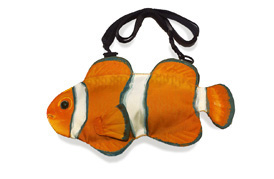
It's a bag! It's a fish!

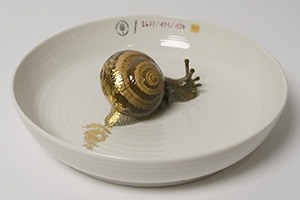
Here are some of the gifts I'd like to give people this holiday season, if only I were crazy or wealthy:

The Fish Bag:


The incredibly pricey porcelain hare:


The porcelain bowl with snail:


Also:
Knitted sushi magnet set
Boog the Bad Ninja
Felt gingerbread man with his head half bitten off
Any of the stupid sock creatures, but especially Christinabelle and Sargg. (Full disclosure: I heart Christinabelle.)